
Video optimization strategies that drive e-commerce sales
QuickAdVideo Team
Author
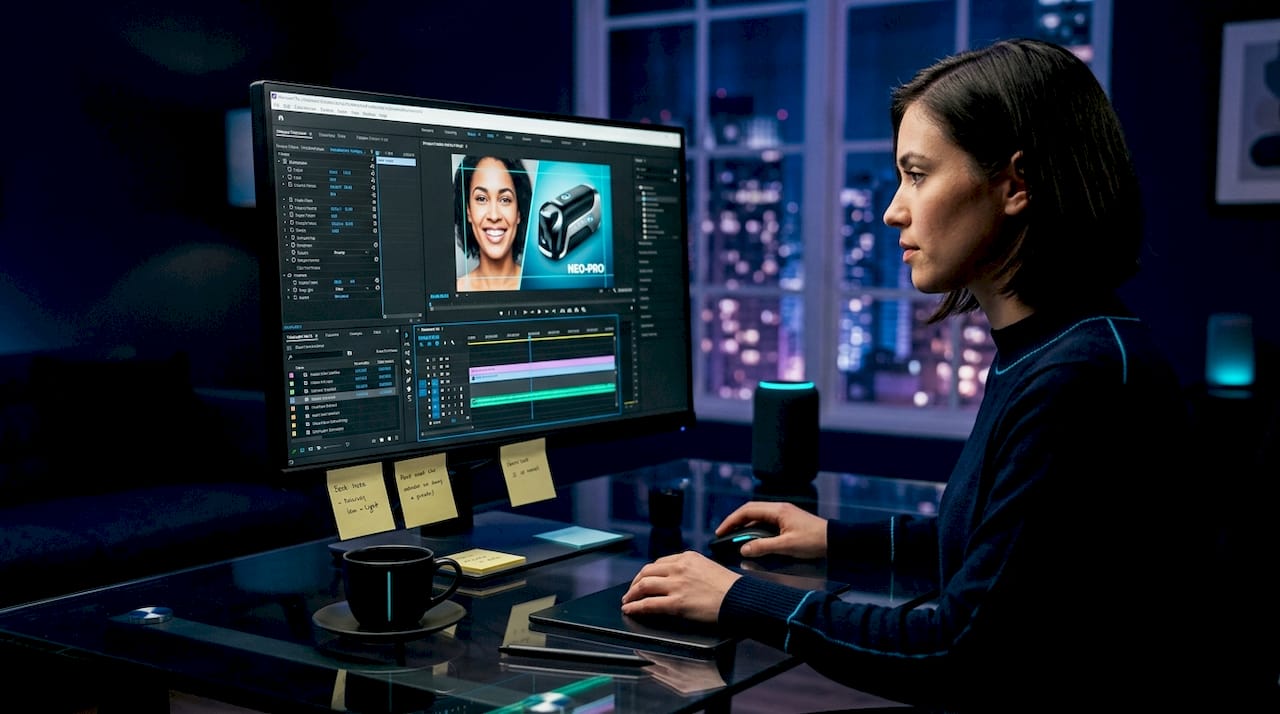
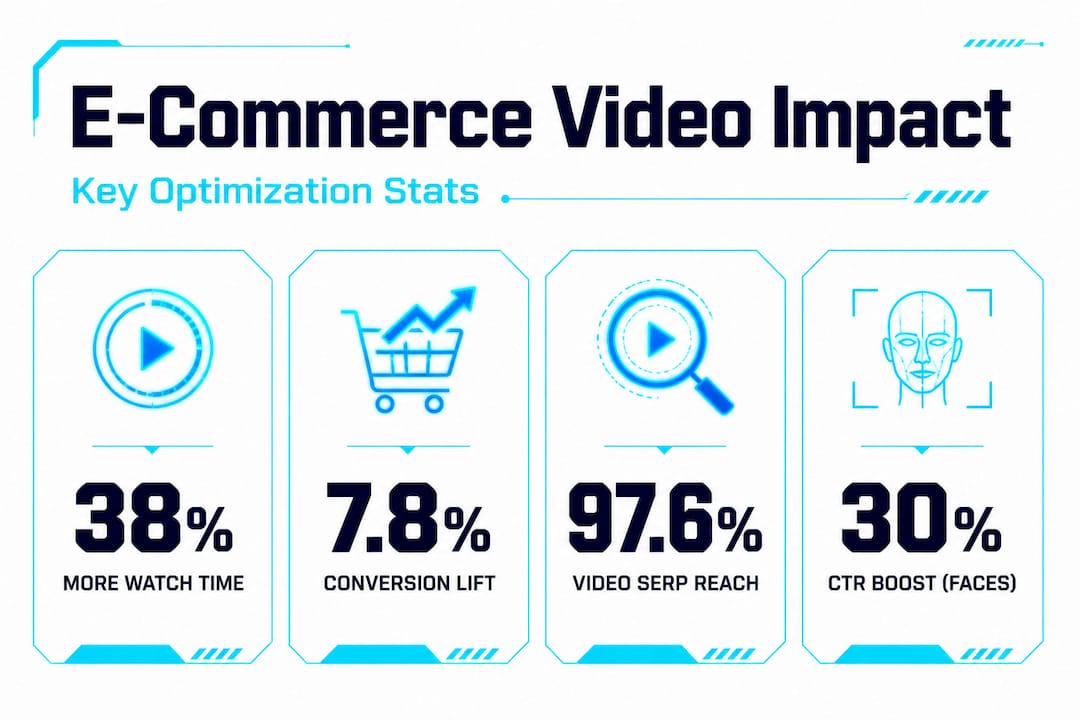
Adding a real face to your video thumbnail can lift click-through rates by 30%, and turning on captions can boost watch time by 38%. Most e-commerce marketers already know video is important, but very few are capturing these quick wins. This guide walks you through the specific optimization tactics that actually move the needle, from technical setup to creative choices to advanced scaling methods, so your video campaigns stop leaking conversions and start working at full capacity.
Table of Contents
- What is video content optimization?
- Key elements for optimized video campaigns
- Authenticity vs polish: Choosing the right style
- Scaling and testing: Advanced optimization tactics
- Why most experts miss hybrid optimization
- Optimize your video content with AI-powered tools
- Frequently asked questions
Key Takeaways
| Point | Details |
|---|---|
| Captions boost engagement | Adding captions or transcripts can increase watch time by up to 38% for your video content. |
| Thumbnails drive clicks | Custom thumbnails featuring faces can raise click-through rates by 30%. |
| UGC raises conversion rates | Authentic user-generated content can lift conversion rates by nearly 8% in e-commerce campaigns. |
| A/B testing is essential | Regularly testing different hooks and CTAs leads to higher video performance and engagement. |
| Hybrid hosting maximizes reach | Balancing YouTube reach with self-hosted SEO authority delivers the best results for video marketing. |
What is video content optimization?
Video content optimization is the practice of improving every layer of your video, from file metadata to creative execution, so more people find it, watch it, and take action. Think of it as SEO applied specifically to video content. When you optimize correctly, you are not just helping search engines index your videos. You are also improving the viewer’s experience, which signals quality to platforms like YouTube, TikTok, and Google.
For e-commerce sellers and digital marketers, this matters because video is now the dominant format across nearly every major discovery channel. A product video that ranks well and converts is a 24/7 sales asset. One that is uploaded raw and untouched is invisible.
The core components of video optimization include:
- VideoObject schema markup so search engines can read and index your video content
- Keyword-rich titles and descriptions that reflect how buyers actually search for your product
- Custom thumbnails designed to drive clicks, not just represent the video
- Captions and transcripts that extend watch time and improve accessibility
- Chapters and timestamps that help viewers navigate and signal content depth
- Hosting strategy, meaning the choice between self-hosting for SEO control vs. YouTube for discovery
Each of these levers compounds. Getting one right helps. Getting all of them right creates a system where your videos consistently attract, engage, and convert. The good news is that AI content creation benefits have made implementing these elements faster and more affordable than ever, especially for small to mid-size e-commerce operations that cannot justify a full production team.
Key elements for optimized video campaigns
With the basics covered, it is time to look at the tactical features that set great campaigns apart from mediocre ones.
Let’s start with the fundamentals that every campaign should have locked in before going live. Most marketers skip at least one of these, and each skip is a missed opportunity.
Schema markup tells Google what your video is, who made it, and what it contains. Without it, your video page is basically invisible to structured search results. Adding VideoObject schema takes about 20 minutes and can qualify your content for rich snippets, which increases organic click-through significantly.
Captions are not optional in 2026. Audio-off viewing is now the norm on mobile, meaning a huge portion of your audience will scroll past your video if they cannot follow it without sound. Captions keep them watching.
Thumbnails are your billboard. Including a real face in your thumbnail lifts CTR by 30% compared to product-only images. This is because faces trigger a psychological response. Humans instinctively look at other humans. Custom thumbnails with high contrast, a clear focal point, and minimal text consistently outperform auto-generated frames.
Hosting choice is where a lot of brands make a costly mistake. YouTube offers 97.6% video SERP presence, meaning it dominates video search results. But if you only use YouTube, you surrender SEO authority to Google’s platform instead of building it on your own site. The smart play is both, and we will cover that in the perspective section.
Here is a quick comparison to help you decide where to prioritize:
| Factor | YouTube | Self-hosted |
|---|---|---|
| Organic reach | Very high | Low without promotion |
| SEO authority | Goes to YouTube | Stays on your domain |
| Setup complexity | Low | Medium to high |
| Analytics depth | Strong | Depends on player |
| Algorithm amplification | Yes | No |
| Branding control | Limited | Full |
| Load speed impact | Minimal | Can impact CLS |
One important technical note: mobile usability and page speed directly affect your video’s performance in search. Mobile CLS shifts create 67% bounce rates, meaning if your video causes layout shifts on mobile load, you are losing more than half your audience before they even press play. Avoid lazy loading without proper placeholders, keep video containers sized correctly for mobile viewports, and always test your pages on real devices.
Meanwhile, UGC-style content lifts conversion rates by 7.8% compared to standard polished ads. More on that in the next section, but it underscores why UGC vs traditional ads is such an important comparison for e-commerce brands to understand before committing to a production style.
Pro Tip: Always A/B test at least two thumbnail variations per video before scaling any ad spend. Even a 5% lift in CTR compounds massively across thousands of impressions. Use your platform’s built-in testing tools or run small paid traffic tests to determine the winner before going broad.
One more essential pointer: high CTR combined with low retention is actually a red flag for the YouTube algorithm. If your thumbnail is clickbait and viewers bounce quickly, the platform will throttle distribution. Your goal is to match the promise of your thumbnail to the actual content of your video. Strong video marketing ROI comes from both getting the click and keeping the viewer.
Authenticity vs polish: Choosing the right style
Understanding technical optimization is vital, but the creative approach you choose also shapes results. Let’s examine which styles perform best and why.
Here is the question most e-commerce brands get stuck on: should we produce polished, studio-quality content, or lean into raw, authentic UGC-style videos? The answer is not one or the other. It depends entirely on where the video will appear and what the viewer’s mindset is at that moment.
UGC and native-style ads outperform polished videos on social platforms like TikTok, Instagram Reels, and Facebook. Why? Because users on these platforms are scrolling for entertainment and connection. A slick, branded video interrupts the flow. A casual testimonial or unboxing video blends in and feels trustworthy.
On YouTube and branded product pages, the dynamic flips. Viewers arrive with research intent. They want to evaluate your product properly. A well-produced demo or explainer builds credibility and gives them the confidence to buy.
When to use UGC-style videos:
- Paid social ads (TikTok, Instagram, Facebook)
- Retargeting campaigns where familiarity builds trust
- Top-of-funnel awareness content
- Product launches targeting younger demographics
- Testimonial and review content
When to use polished, studio-quality videos:
- YouTube pre-roll and in-feed ads
- Product pages and landing pages
- Email campaigns targeting existing customers
- Brand awareness campaigns with large budgets
- Trade or B2B marketing contexts
The 7.8% conversion rate lift from UGC content is not an accident. Buyers trust peer voices more than brand voices. A real customer holding your product and speaking casually about their experience carries more persuasive weight than the most beautifully shot commercial.
That said, authenticity does not mean low effort. The most effective UGC-style videos still have a clear structure: a strong opening hook in the first two seconds, a concrete problem statement, a natural product demonstration, and a simple call to action. Sloppy execution kills trust just as fast as over-production.
Pro Tip: Match your video style to the platform’s native content, not your brand’s aesthetic preferences. What looks “on-brand” to your team may look out of place to your audience. Study what organic creators are posting on each platform and mirror that energy with your message layered on top.
If you need inspiration for formats that actually work, exploring creative video content ideas tailored to e-commerce is a practical starting point. And if you want to push engagement further, experimenting with interactive video ads can add a conversion layer that static or passive video simply cannot match.
Scaling and testing: Advanced optimization tactics
Now that we have sorted style and core elements, let us explore how the most successful marketers scale and optimize their video campaigns.
Testing is not optional at scale. It is the system. Brands that consistently grow their video marketing results are not guessing about what works. They run structured tests, remix winners, and iterate weekly. Here is the process:
- Identify your top-performing video from the last 30 days. Look at CTR, watch time, and conversion rate together, not just views.
- Isolate the hook. The first three seconds determine whether most viewers stay or scroll. Create three to five hook variations of that same video using different opening lines or visual frames.
- Test CTAs. Run two versions: one with a hard CTA (“Shop now”) and one with a softer CTA (“Learn more”). Compare conversion rates, not just clicks.
- Remix the structure. Take a long-form video and cut it into three short-form clips for social. Repurpose a UGC testimonial into a polished YouTube pre-roll. See which format resonates where.
- Feed winners back into your workflow. Once you identify a winning hook or CTA, build that learning into your next batch of production.
Programmatic AI tools enable this kind of scale without burning out your team. Instead of producing five videos a month manually, AI-driven workflows can generate 20 to 30 variants from a single input, giving you a real testing surface to work with.
Recommended testing cadence:
| Campaign size | Variants per ad set | Testing frequency |
|---|---|---|
| Small (under $1K/month) | 3-5 | Every two weeks |
| Medium ($1K-$10K/month) | 5-10 | Weekly |
| Large (over $10K/month) | 10-20 | Weekly or more |
One often-overlooked tactic is GEO-optimized transcripts. Adding AI-citable transcripts and summaries to your video pages makes your content more indexable by AI-driven search features, which are increasingly common in 2026. This is a low-effort, high-reward move that most brands skip entirely.
If you want to set up this kind of system efficiently, learning how to automate video with AI gives you the foundation. And if you are new to the space, the AI video ads guide is a great place to build your baseline understanding before scaling.
Why most experts miss hybrid optimization
Let us step back and consider a more effective approach, and why most experts miss this.
The prevailing advice in video marketing tends to fall into two camps. Camp one says “be on YouTube, that is where search traffic lives.” Camp two says “go social-first, short-form is king.” Both views are incomplete, and following either one exclusively is leaving serious reach and revenue on the table.
The hybrid approach outperforms both: use YouTube for broad reach and social proof signals, and self-host optimized video pages on your own domain to build lasting SEO authority. These two strategies do not compete. They reinforce each other.
YouTube gives you algorithm-driven distribution, engagement signals, and the trust that comes from a recognized platform. Your self-hosted pages give you control over the user experience, conversion pathways, and ownership of the search equity your content earns. When a buyer searches for your product category and finds a YouTube video and your product page in the same search results, your brand dominates that moment. That is the hybrid advantage.
The piece that ties it all together is transcripts. Every video on both your YouTube channel and your self-hosted pages should have a searchable transcript. AI search features pull from text, not audio. A well-structured transcript with keywords turns your video into a double asset: a piece of visual content and a crawlable text document. This is not a future-proofing tactic. It is a necessity right now.
Too many brands invest heavily in production quality while underinvesting in distribution architecture. A beautifully produced video that no one can find or index is a waste. Start with your cinematic video strategy if you want polish, but never deploy it without the optimization layer underneath. The brands winning at video in 2026 are not the ones with the biggest production budgets. They are the ones with the most complete systems.
Optimize your video content with AI-powered tools
If you have made it this far, you already understand that video optimization is not about one single tactic. It is a system of smart choices that compound over time.
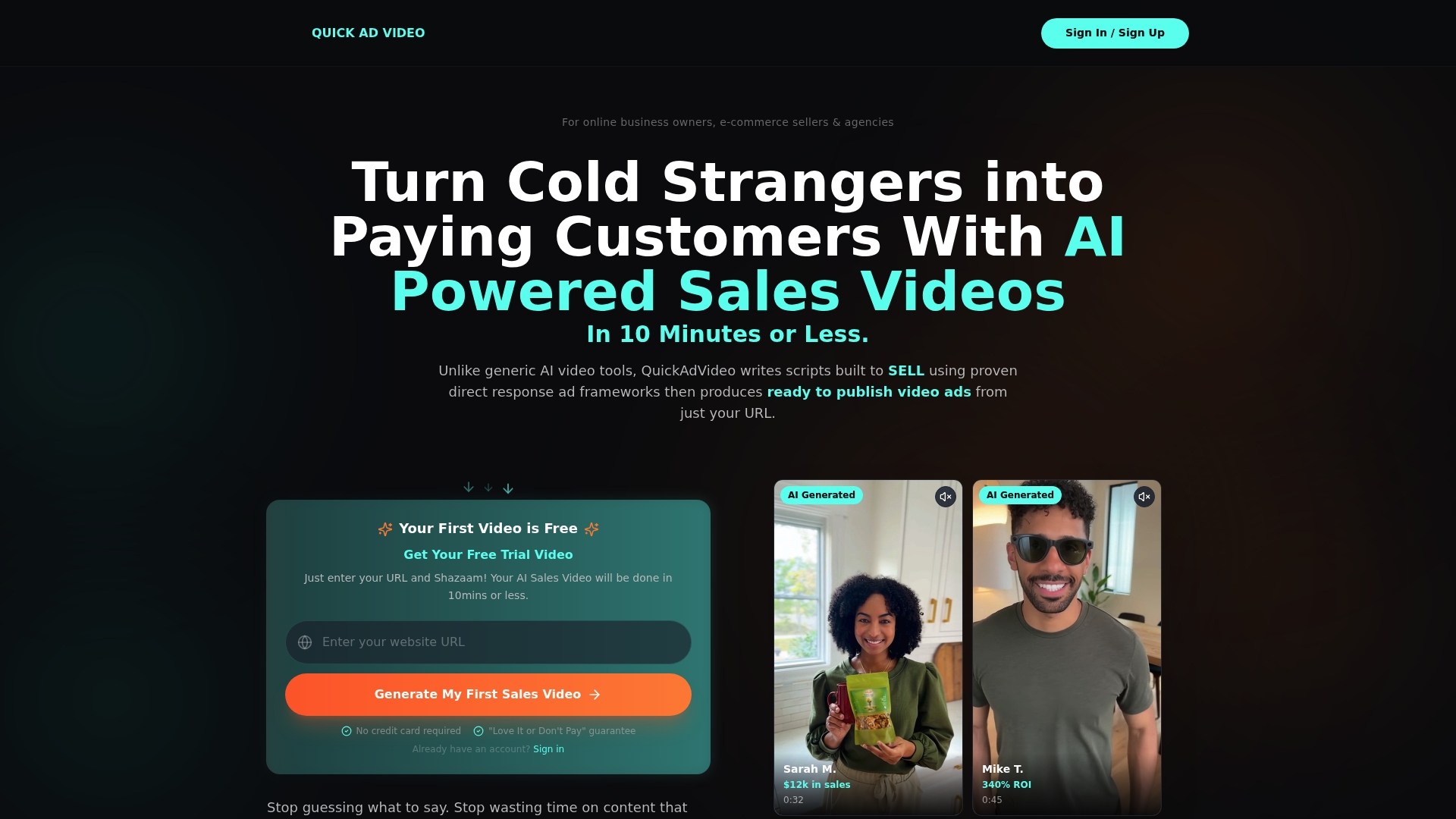
QuickAdVideo is built for exactly this kind of systematic, scalable video marketing. You paste in your product URL, choose a format (UGC, cinematic, viral story), and the platform generates a fully structured, high-converting sales video in minutes. Scripts are built on proven direct response frameworks, captions are included automatically, and videos are formatted for direct publishing to TikTok, Instagram, YouTube, and Facebook. Whether you are testing five hook variants or launching a full campaign, the AI sales video generator gives you the speed and volume to optimize without burning your budget or your team.
Frequently asked questions
How do captions and transcripts impact video engagement?
Captions and transcripts increase watch time by up to 38%, particularly for mobile viewers who watch with audio off.
Is self-hosting videos better than using YouTube?
Self-hosting gives you full SEO authority on your own domain, but YouTube aids discovery with far greater organic reach, making the hybrid approach the most effective option.
What is the ideal length for video ads versus educational content?
Short-form ads perform best at 15 to 60 seconds, while educational content typically succeeds at 8 to 15 minutes, depending on audience intent.
Can AI help automate video content optimization?
Yes. AI-driven workflows let you generate and test 5 to 10 video variants per ad set every week, dramatically accelerating the optimization cycle without proportional cost increases.
Recommended
Related Posts

Why Use Templates for Video Ads: Scale Smarter
Discover why use templates for video ads to streamline production. Boost efficiency and scale your campaigns without losing creativity!

The Role of Data-Driven Video Ads in Boosting ROI
Discover the role of data-driven video ads in boosting ROI. Learn how analytics enhance engagement, optimize campaigns, and drive results.

Create Persuasive Video Ads Workflow That Converts
Learn how to create persuasive video ads workflow that transforms your ideas into optimized, high-converting campaigns. Get started today!