
Vertical video marketing: boost engagement and sales
QuickAdVideo Team
Author
Posting a landscape video on TikTok or Instagram Reels is like handing out a flyer sideways. Technically possible, but nobody wants to tilt their phone to read it. Vertical video fills the entire mobile screen, claims the viewer’s complete attention, and moves with the natural habits of how people scroll, shop, and discover products today. Yet most e-commerce brands still treat it as an afterthought, simply cropping down horizontal footage and calling it done. This article breaks down what vertical video marketing truly means, why it performs so differently from other formats, the core principles behind it, and the practical moves that turn views into revenue.
Table of Contents
- Defining vertical video marketing: More than just 9:16
- Core elements of high-performing vertical video
- Vertical vs. horizontal video: When does format matter?
- Best practices and common pitfalls in vertical video marketing
- Why most e-commerce brands miss the real power of vertical video
- Accelerate your results with AI-powered vertical video
- Frequently asked questions
Key Takeaways
| Point | Details |
|---|---|
| Vertical video is feed-first | It’s designed for maximum impact on mobile social feeds where your customers spend the most time. |
| Execution beats format | Testing your hooks, captions, and CTAs matters far more than simply using a 9:16 ratio. |
| Choose format by intent | Pick vertical or horizontal depending on platform, audience, and message depth, not a one-size-fits-all rule. |
| Captions are critical | Always add captions and overlays because most users watch with the sound off. |
| Iterate for success | Regularly test and optimize vertical videos to stay ahead in e-commerce competition. |
Defining vertical video marketing: More than just 9:16
Vertical video marketing is not simply the act of recording your phone upright. It is a mobile-first content strategy that aligns your format, storytelling style, on-screen elements, and calls to action with how people actually behave on platforms like Instagram Reels, TikTok, YouTube Shorts, and Facebook Stories.
The 9:16 aspect ratio fills every pixel of a mobile screen, eliminating the dead space and black bars that come with repurposed horizontal content. That full-screen presence matters enormously because it removes distractions and puts your product front and center, exactly where impulse purchase decisions happen.
But the format is only the entry point. As one strategy guide notes, vertical video blends mobile-first framing with iterative testing of hooks, edits, captions, and CTAs. In other words, it is an ongoing process, not a one-time production decision. Brands that understand this build a competitive edge. Brands that only flip the aspect ratio miss the point entirely.
Here is a quick look at where vertical video lives and how it shows up across major platforms:
| Platform | Recommended dimensions | Best content types |
|---|---|---|
| TikTok | 1080 x 1920 (9:16) | Short-form product demos, trending audio, UGC |
| Instagram Reels | 1080 x 1920 (9:16) | Behind the scenes, testimonials, announcements |
| YouTube Shorts | 1080 x 1920 (9:16) | Quick tutorials, product reveals, listicles |
| Facebook Stories | 1080 x 1920 (9:16) | Limited-time offers, lifestyle content |
| Pinterest Idea Pins | 1000 x 1500 (2:3) | DIY, how-to, product styling |
Understanding which video marketing types drive sales on each platform gives you a roadmap for format decisions. The platforms listed above collectively reach billions of daily mobile users, and every one of them rewards content that looks native, not repurposed.
Key reasons vertical video dominates mobile social feeds:
- Screen takeover: 9:16 fills the viewport with zero dead space
- Native feel: Content looks organic rather than repurposed or forced
- Algorithm preference: TikTok, Instagram, and YouTube Shorts actively boost vertical-first content
- Thumb-stopping power: Full-screen visuals interrupt the scroll far more effectively
- Lower production barrier: Smartphones record vertical natively, reducing setup friction
“Vertical video fills the mobile screen and is ideal for social discovery and impulse purchases, making it the dominant format for e-commerce brand content on social platforms.”
Core elements of high-performing vertical video
Once you understand what vertical video marketing is, success comes down to mastering the critical components that separate scroll-stopping content from videos nobody finishes.
The first 3 seconds are everything. Mobile users make a keep-or-skip decision almost instantly. Your opening frame must create enough curiosity, surprise, or desire to override the reflex to swipe away. A strong hook can be a bold visual, an unexpected claim, a relatable pain point, or a product result shown immediately. For e-commerce brands, showing the outcome first and explaining it second almost always outperforms the reverse.

Concise storytelling builds momentum. Vertical video rewards clarity over complexity. Shorter runtime does not mean shallower content; it means eliminating every word, scene, or graphic that does not actively move the viewer toward a decision. Think about the single transformation your product delivers and build your entire narrative around that one idea. Two competing ideas in a single video will dilute both.
Captions and overlays are non-negotiable. Effective vertical video relies on a strong opening hook, concise narrative, captions for silent viewing, and explicit CTAs that match platform behaviors. A significant share of mobile users scroll with their sound off, especially in public spaces or work environments. If your message only exists in the audio track, you are invisible to a massive portion of your potential audience. Text overlays also function as visual signposts that guide the viewer through your story even when they cannot or will not listen.
CTAs must match the platform’s native behavior. Asking a TikTok viewer to “click the link in bio” works there because that is the platform convention. Telling an Instagram Stories viewer to “swipe up” (or “tap the sticker” in newer formats) feels natural because it mirrors the native gesture. Mismatched CTAs create friction that kills conversions even when the rest of the video lands perfectly.
Building compelling video messaging means treating each platform as its own distinct stage, not just another distribution channel for the same asset.
Pro Tip: Set a weekly rhythm of testing at least one new hook variation per video series. Small changes to the opening line or first visual frame can double completion rates without touching any other element of the video.
Great vertical videos also embrace production techniques that feel intentional rather than accidental. Cinematic video techniques adapted for the vertical frame, like close-up product shots, motion text that tracks with movement, and strong contrast in the opening frame, can elevate a phone-recorded clip into something that feels premium and trustworthy.
Vertical vs. horizontal video: When does format matter?
Understanding the pieces is key, but what if you are not sure which video format to use for your message or campaign? The answer depends on where your audience is watching, what you are trying to say, and how much depth your content requires.
Vertical video is built for mobile, but it is not always the right answer. Horizontal can outperform for desktop viewing, long-form content, or messages that require wide framing and detail. A product unboxing that reveals packaging detail might shine in horizontal on YouTube, while the same product’s key benefit might land harder in a 15-second vertical clip on Reels.
Here is a practical comparison:
| Format | Best for | Pros | Cons |
|---|---|---|---|
| Vertical (9:16) | TikTok, Reels, Stories, Shorts | Full-screen mobile presence, native feel | Poor on desktop, less room for detail |
| Horizontal (16:9) | YouTube, Facebook feed, desktop ads | Wider framing, depth-driven narratives | Crops poorly on mobile, feels outdated on social feeds |
| Square (1:1) | Facebook feed, LinkedIn | Works on both mobile and desktop | Does not maximize either screen |
Three steps to choose the right format for your next campaign:
- Start with the destination. Where will most viewers watch this video? If your analytics show 80% mobile traffic, vertical is almost always the answer. If you are building a product explainer for a B2B audience that browses on desktop, horizontal gives you the framing you need.
- Match depth to duration. Short, punchy content benefits from vertical. Longer, detail-rich content, like tutorials or brand stories over 3 minutes, often performs better in horizontal because the wider frame supports the visual complexity.
- Check platform specs before you script. Designing a video around a format that does not fit the platform you are targeting is a waste of budget. TikTok deprioritizes horizontal content in its algorithm. YouTube Shorts requires 9:16. Build your viral video strategy around platform specs from the start.
Pro Tip: Whenever your production budget allows, shoot your primary content in vertical and capture a few horizontal cutaways simultaneously. Light editing gives you both formats from one shoot, doubling your placement options across video advertising channels without doubling your costs.
Best practices and common pitfalls in vertical video marketing
With the formats compared, you are ready to act. Here is how to do it right and sidestep the costly errors that trip up brands at every stage.
Production and editing best practices:
- Film at the highest resolution your device supports, then scale down. You can always compress; you cannot recover lost quality.
- Use on-screen text strategically. Place key claims in the upper or lower third of the frame, keeping the center clear for visuals.
- Keep brand colors and logo placement consistent across all vertical videos to build visual recognition in the feed.
- Edit to the rhythm of your audio track. Movement synced to music or speech feels intentional and keeps viewers engaged longer.
- Use transitions sparingly. A clean cut almost always outperforms overdesigned transition effects in direct-response content.
The five most common mistakes brands make:
- Ignoring captions entirely. Captioning and on-screen messaging are non-negotiable for both accessibility and performance, since many users watch with the sound off. Skipping captions hands your competitors every viewer who scrolls in silence.
- Overcomplicating the message. Trying to communicate three benefits, two offers, and a brand story in 30 seconds results in a video that communicates nothing memorably. Pick one angle. Own it completely.
- Using a generic or weak hook. Opening with a logo animation or a slow product pan gives the algorithm no reason to push your video and gives the viewer no reason to keep watching. Open with the problem, the result, or the unexpected.
- Mismatched CTAs. Telling a TikTok audience to “visit our website” without a direct link in bio, or using desktop-style CTAs on Stories, creates confusion and kills the conversion path before it starts.
- Shooting once and never iterating. One video that performs well is a data point, not a strategy. The brands winning on vertical video post frequently, test variations, and build on what the analytics tell them.
Exploring interactive video ad formats is one way to push past passive viewing and create videos that prompt direct responses. For creative video content ideas that give your vertical content fresh angles, build a content calendar that rotates between problem-solution, testimonial, and product-in-use formats weekly.
Pro Tip: Pull your video analytics every Monday morning. Look at average watch time, completion rate, and CTA taps for every video published the prior week. One weekly analytics session consistently beats sporadic deep dives for catching what is working before you scale spend.
Why most e-commerce brands miss the real power of vertical video
Here is a perspective that most vertical video guides will not tell you. Brands get obsessed with the format and completely neglect the system that makes the format pay off.
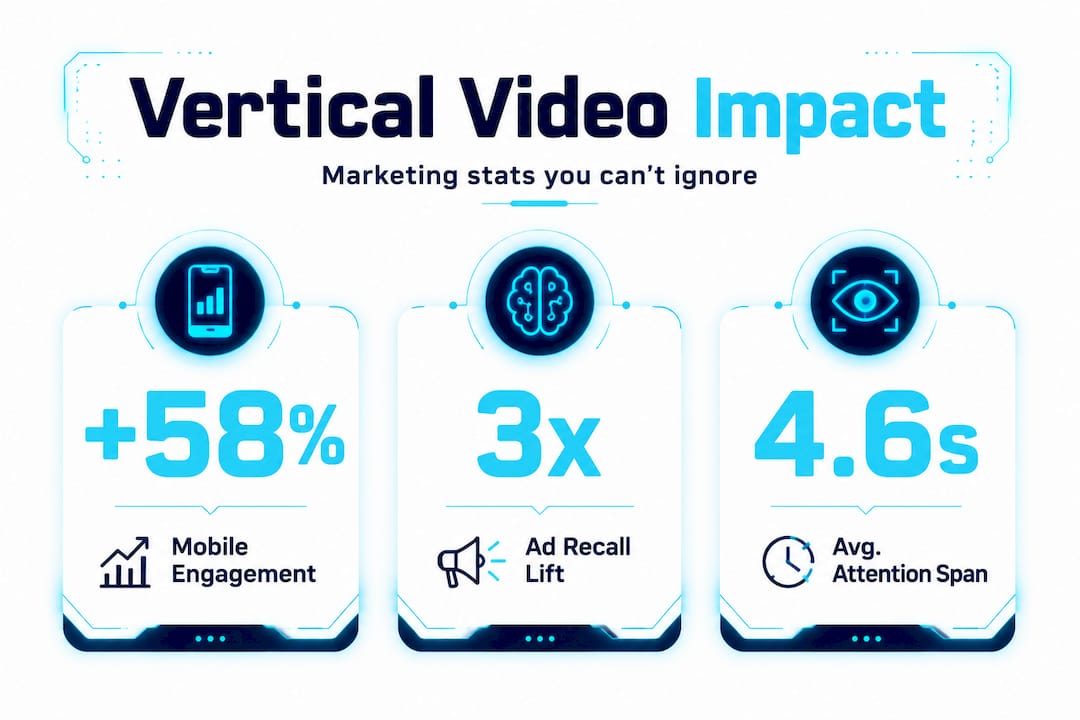
The conversation in most marketing teams goes like this: “We need more Reels. Let’s shoot some vertical content.” Then they produce a few clips, publish them, check the view counts, and either declare victory or give up. Neither response is correct because neither is based on enough data.
Vertical video marketing should be an iterative process, not just a format decision. The brands generating serious revenue from TikTok and Reels are not simply filming upright. They are running controlled experiments on hooks, posting at different times, testing caption styles, swapping audio tracks, and pulling detailed analytics after every single post. They think like performance marketers, not content creators.
The mindset shift is this: your first vertical video is not your product. It is your first data point. Your strategy is the product, and it gets built over dozens of iterations.
Most e-commerce teams lack the infrastructure to support that kind of volume. Producing even five quality vertical videos a week requires scripting, filming, editing, captioning, and scheduling. Done manually, that workload is unsustainable for a lean team. This is exactly where AI-driven video ad strategies change the game. When you can generate a tested, platform-ready script and a fully edited vertical video in minutes rather than days, iterating at scale becomes possible for any team, any budget.
The brands that win on vertical video in 2026 are not the ones with the biggest production budgets. They are the ones who test the fastest, learn the most, and optimize relentlessly based on real audience behavior.
Accelerate your results with AI-powered vertical video
Ready to put these practices to work without hiring a production team or spending weeks learning editing software?

QuickAdVideo is built specifically for e-commerce sellers, dropshippers, and digital marketers who need to produce high-converting vertical video content at speed. Paste in your product URL and the platform generates a direct-response video script, selects the right video ad template from UGC, cinematic, or viral story formats, and delivers a publish-ready vertical video in minutes. Every output is built around proven conversion frameworks, with captions, overlays, and platform-specific CTAs included automatically. You can publish directly to TikTok, Instagram, YouTube, and Facebook from inside the platform. Explore the full suite of AI sales video tools and see how fast you can go from product URL to live vertical campaign. For automated advertising solutions that scale with your growth, QuickAdVideo gives you the iteration speed that serious video marketing requires.
Frequently asked questions
What does vertical video marketing mean for e-commerce brands?
Vertical video marketing means creating videos designed for mobile-first, feed-native consumption, which is essential for engaging customers where they shop and scroll. Vertical video fills the mobile screen and is ideal for social discovery and impulse purchases.
How do you optimize vertical videos for maximum engagement?
Use rapid hooks in the first 3 seconds, keep your message focused on a single benefit, always add captions and overlays, and match your CTA to the native behavior of the platform you are posting on. A rapid opening hook and captions are the two highest-leverage improvements you can make immediately.
When is horizontal video better than vertical?
Horizontal is best for desktop audiences, long-form content over 3 minutes, or product explanations that require wide framing and visual detail. Horizontal video can outperform vertical on desktop and for longer, depth-driven content that does not translate well to a narrow frame.
Do all platforms require vertical video for ads?
Not all platforms require it, but TikTok, Instagram Reels, and YouTube Shorts actively prioritize vertical formats for organic reach and paid ad performance, making it the default choice for social-first campaigns.
What’s the most common mistake in vertical video marketing?
Neglecting captions and on-screen text is the most frequent and most damaging error, particularly because so many mobile viewers watch without sound. Captioning and overlays are essential for both accessibility and measurable performance on every major platform.
Recommended
Related Posts

Why Use Templates for Video Ads: Scale Smarter
Discover why use templates for video ads to streamline production. Boost efficiency and scale your campaigns without losing creativity!

The Role of Data-Driven Video Ads in Boosting ROI
Discover the role of data-driven video ads in boosting ROI. Learn how analytics enhance engagement, optimize campaigns, and drive results.

Create Persuasive Video Ads Workflow That Converts
Learn how to create persuasive video ads workflow that transforms your ideas into optimized, high-converting campaigns. Get started today!