
Marketing funnel videos: boost sales and engagement fast
QuickAdVideo Team
Author
Landing pages with video boost conversions by 86%, yet most e-commerce entrepreneurs still rely on static images and text to move buyers through their funnels. That gap represents a massive opportunity. A marketing funnel video is not just a product clip or brand reel. It is a strategically crafted piece of content designed to guide a specific type of viewer toward a specific action, whether that is clicking an ad, joining an email list, or completing a purchase. And with AI-powered automation, creating this content no longer requires a film crew, a big budget, or weeks of production time.
Table of Contents
- What is a marketing funnel video?
- How marketing funnel videos outperform static content
- Integrating automated video into your e-commerce funnel
- Successful marketing funnel video strategies and case studies
- Why most marketing funnel videos fail—and how to get yours right
- Bring your e-commerce funnel to life with QuickAdVideo
- Frequently asked questions
Key Takeaways
| Point | Details |
|---|---|
| Video funnels boost conversion | Video content in funnels drives far higher sales and engagement than static formats. |
| Automation enables scale | Automated video tools make it possible to build effective funnels at any business size. |
| Shoppable videos outperform static | Shoppable videos deliver up to six times higher conversion rates than traditional images. |
| Strategic placement matters | Funnel videos achieve best results when tailored to specific stages and customer needs. |
What is a marketing funnel video?
A marketing funnel video is any video content intentionally built to move a viewer through one or more stages of the buyer journey. The classic funnel follows four stages: awareness, interest, desire, and action. Each stage needs a different message, a different tone, and often a different format. Most brands make one generic video and blast it everywhere. That approach rarely works.
At the awareness stage, your video’s job is to stop the scroll and introduce the problem your product solves. At the interest stage, you explain how your product addresses that problem better than alternatives. The desire stage is where emotion kicks in, and testimonials, transformation stories, or live demos do the heavy lifting. Finally, the action stage drives the click, purchase, or sign-up with urgency, a clear call to action, and a frictionless path forward.
“Video content that is mapped to funnel stages converts viewers into buyers far more reliably than one-size-fits-all promotional videos. Context is everything.”
87% of marketers report a direct increase in sales linked to funnel-specific video content. That number should tell you something important: the format itself works when it is used with intention. The deeper value of cinematic video impact in funnel campaigns comes from the emotional pull that high-quality visuals create, even when the underlying message is simple.
Common funnel video types include:
- Explainer videos: Short, focused clips that clarify what your product does and why it matters
- Testimonial videos: Real or scripted social proof that reduces buyer hesitation
- Demo videos: Walkthroughs that show your product in action, building confidence before the purchase
- Shoppable videos: Interactive videos that let viewers buy directly from the content without leaving the experience
Each type serves a distinct role. Matching the right format to the right stage is the single biggest factor separating funnel videos that convert from ones that get skipped.
How marketing funnel videos outperform static content
The numbers are not subtle. Shoppable videos deliver 9 to 17% conversion rates compared to just 2 to 3% for static product images. That is not a small edge. That is a fundamentally different outcome from the same audience. And it is not because video is inherently magical. It is because video activates more cognitive triggers: motion captures attention, voice builds trust, and storytelling creates emotional investment that a flat image simply cannot replicate.
| Content type | Average conversion rate | Email click-through rate | Engagement time |
|---|---|---|---|
| Static images and text | 2 to 3% | Baseline | Low |
| Standard video | 5 to 8% | 2x baseline | Medium |
| Shoppable video | 9 to 17% | Up to 4x baseline | High |
| Personalized video | 10 to 20% | Up to 5x baseline | Very high |
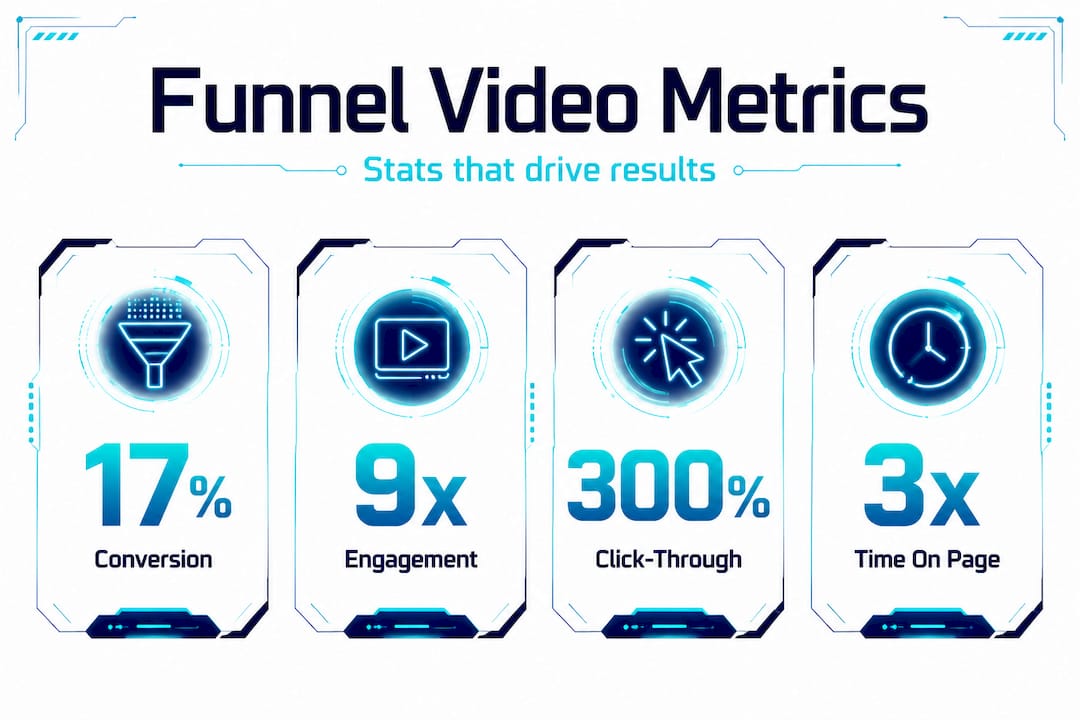
Email campaigns are another area where the gap is stark. Video emails achieve 300% higher click-through rates than plain-text equivalents. Simply including the word “video” in the subject line lifts open rates. That means adding video to your email funnel is one of the fastest, lowest-effort improvements you can make.
There are clear reasons why video wins, and understanding the psychology of video selling helps you build better content intentionally. Humans process visual information 60,000 times faster than text. Video also conveys tone, emotion, and credibility in ways that written copy struggles to match, especially for first-time buyers who have no prior relationship with your brand.
Top benefits of funnel videos over static content:
- Higher on-page engagement, which signals trust to search engines and platforms
- Greater retention of product information from viewers
- Stronger emotional connection that shortens the time to purchase
- Better performance across paid advertising on TikTok, Instagram, and Facebook
- Easier to repurpose across multiple funnel stages with minor edits
For shoppable video ideas that work across different product categories, the format has become especially powerful for e-commerce brands in fashion, beauty, fitness, and home goods, where visual demonstration is core to the buying decision.
Integrating automated video into your e-commerce funnel
Knowing that video outperforms static content is only half the equation. The practical challenge most entrepreneurs face is execution at scale. Making one polished video is manageable. Creating five or ten targeted videos for different funnel stages, audience segments, and platforms feels impossible without a team. That is where automation changes everything.

AI automation for video production now allows a solo operator or small team to produce funnel-ready video content in minutes, not days. AI tools handle scriptwriting based on proven direct response frameworks, visual assembly, voiceover, and even platform-specific formatting. You provide the product URL or brief. The system handles the rest.
Here is a practical step-by-step approach for integrating automated video into your funnel:
- Map your funnel stages first. Before creating any video, identify the four stages for your specific product and audience. Write down what questions or objections exist at each stage.
- Match video formats to stages. Use short-form awareness clips for cold audiences, demo videos for warm traffic, and testimonial or social proof videos for retargeting.
- Feed your product information into an AI video tool. Most platforms, including QuickAdVideo, only require your product URL to generate a first draft.
- Customize the script and visual style. Review the AI-generated content, adjust the hook and call to action for your specific audience, and choose a visual model that fits your brand.
- Place videos at the right funnel touchpoints. Landing pages, email sequences, retargeting ads, and social media posts all require slightly different video approaches.
- Track and optimize. Use platform analytics to measure watch time, click-through rate, and conversion rate at each stage, then iterate.
Landing pages with video consistently see an 86% lift in conversions, but placement matters. A demo video performs poorly if it appears before a viewer knows they have the problem your product solves. Sequence is strategy.
| Funnel stage | Best video format | Ideal placement | Primary goal |
|---|---|---|---|
| Awareness | Short-form hook or story | Social media ads, TikTok, Reels | Stop the scroll, introduce problem |
| Interest | Explainer or UGC-style | Landing page, YouTube pre-roll | Explain the solution |
| Desire | Demo, testimonial | Product page, retargeting ad | Build confidence and emotion |
| Action | Shoppable, offer video | Cart page, email sequence | Drive the click or purchase |
Pro Tip: Segment your video content by audience temperature. A viewer who has never heard of your brand needs a very different video than someone who visited your product page twice but did not buy. Even small personalization, like referencing a specific interest or concern, can lift conversions significantly.
Effective video messaging at each stage is about clarity, not creativity. The most-converting funnel videos are often the simplest, because they stay focused on one problem, one solution, and one action. If you want to explore what modern AI can do for your content calendar, the full list of AI video creation benefits covers the business case comprehensively.
Successful marketing funnel video strategies and case studies
Strategy without examples is just theory. Let’s look at what actually works when brands commit to funnel-specific video content and pair it with smart automation.
The most consistently successful funnel video formats in e-commerce share a few common traits: they are short, they have a clear hook within the first three seconds, they focus on a single outcome, and they include a visible, specific call to action. No hedging. No trying to accomplish five things at once.
Winning funnel video formats include:
- UGC-style testimonial ads: Filmed or AI-generated to resemble organic user content, these reduce ad fatigue and build instant peer trust
- Problem-solution-offer stories: A three-part structure that takes the viewer from pain point to product to purchase in under 60 seconds
- Before-and-after demos: Particularly powerful for beauty, fitness, cleaning, and home improvement products where transformation is the selling point
- Limited-time offer clips: Short, urgent videos for the action stage that create a reason to buy now rather than later
- Social proof stacks: Rapid-fire testimonial clips edited together to create an overwhelming sense of validation
One mid-sized e-commerce brand in the skincare space switched from static product images to AI-generated UGC-style demo videos for their retargeting campaigns. Their cost-per-purchase dropped by 40% within the first 30 days. The videos were not cinematic. They were simple, direct, and matched exactly to the concerns of viewers who had already shown interest but had not converted. That is funnel thinking in action.
Another e-commerce operator in the fitness equipment category used video funnel case studies to map their top-performing content formats and found that 90-second explainer videos placed on their landing page consistently outperformed every other element. When they added an interactive video ad to their retargeting flow, abandoned cart recovery improved by over 25%.
Shoppable videos converting at 9 to 17% are not outliers when the product is visually compelling and the video is correctly placed at the desire or action stage. Brands that see poor results from shoppable video almost always made the mistake of using it at the wrong stage, showing it to cold audiences who have no context for the brand.
Pro Tip: Build a simple A/B testing rhythm. Run two versions of each funnel video, changing only one variable at a time, such as the hook, the call to action, or the video length. Even small improvements compound quickly when your ad spend scales. A step-by-step video ads guide can help you structure this testing process from the start.
Why most marketing funnel videos fail—and how to get yours right
Here is an uncomfortable truth: the majority of marketing funnel videos underperform not because of production quality, but because of strategic laziness. Brands put a product video on a landing page, call it “funnel marketing,” and then wonder why results are flat.
The most common failure mode is generic content. A video that tries to speak to everyone ends up resonating with no one. The second most common failure is mismatched placement. Dropping a detailed demo video into a cold ad targeting people who have never heard of the brand is the video equivalent of proposing on a first date. The sequence is wrong.
Poor automation is a growing problem too. Some teams automate the volume but forget the strategy. They generate 20 videos, post them across every channel, and have no system for measuring which ones actually move people through the funnel. Volume without strategy is just noise.
What actually works is straightforward. First, build clarity into every video. One viewer, one problem, one solution, one action. That constraint feels limiting, but it forces you to make better creative decisions. Second, prioritize personalization. Even at scale, modern AI tools can help you create variants that speak to different audience segments. Third, close the loop. Connect your video analytics to your sales data so you can see which videos are actually generating revenue, not just views.
The video messaging tips that consistently produce results all share one characteristic: they treat the viewer as a specific person with a specific problem, not as a demographic category. That shift in thinking changes everything about how you write hooks, structure your message, and design your calls to action. Automation helps you scale, but intention is what makes the content convert.
Bring your e-commerce funnel to life with QuickAdVideo
If this article has made one thing clear, it’s that funnel video works. The data is conclusive, the strategies are proven, and the barriers to entry have never been lower thanks to AI automation. The remaining question is: how do you actually start producing this content consistently without burning your budget or your schedule?
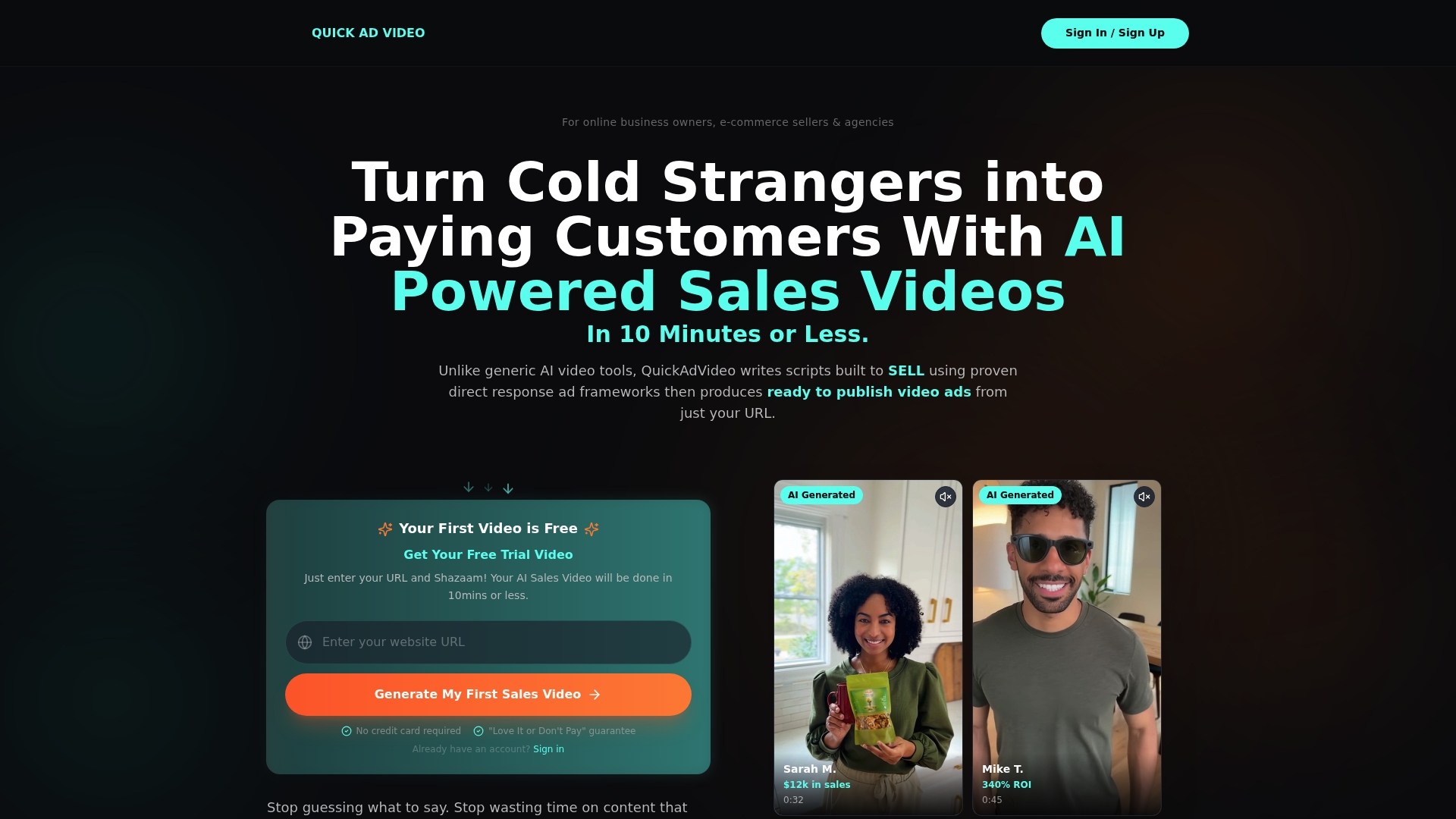
QuickAdVideo was built specifically to solve that problem for e-commerce entrepreneurs, dropshippers, and digital marketers. You paste your product URL, select a funnel video format from the platform’s library of AI video funnel models including UGC, cinematic, and viral story styles, and the system generates a high-converting script and video in minutes. No editing skills required. No camera time needed. Direct publishing to TikTok, Instagram, YouTube, and Facebook is built in, so your funnel videos reach the right audiences without extra steps. Whether you need one video or a hundred, QuickAdVideo scales with you.
Frequently asked questions
What makes a marketing funnel video effective?
Effective funnel videos are targeted to a specific audience at a specific stage, with a clear hook and one call to action. Video on landing pages alone can lift conversions by 86% when the content matches the viewer’s intent.
Can automation really scale video content for small businesses?
Yes. AI-powered platforms now allow small teams to generate, customize, and publish multiple funnel videos in a single session, removing the bottleneck of traditional video production entirely.
How do shoppable videos fit into the marketing funnel?
Shoppable videos belong in the desire and action stages, where buyers are close to purchasing. They convert at 9 to 17% compared to 2 to 3% for static content, making them one of the highest-return formats available.
Do video emails really outperform plain text?
Absolutely. Video emails achieve up to 300% higher click-through rates than standard text emails, making them one of the most underutilized tools in e-commerce email marketing.
Recommended
Related Posts

Why Use Templates for Video Ads: Scale Smarter
Discover why use templates for video ads to streamline production. Boost efficiency and scale your campaigns without losing creativity!

The Role of Data-Driven Video Ads in Boosting ROI
Discover the role of data-driven video ads in boosting ROI. Learn how analytics enhance engagement, optimize campaigns, and drive results.

Create Persuasive Video Ads Workflow That Converts
Learn how to create persuasive video ads workflow that transforms your ideas into optimized, high-converting campaigns. Get started today!