
How to craft effective video messaging for higher conversions
QuickAdVideo Team
Author
Product videos lift conversions by 80%+, yet most e-commerce brands and agencies are still publishing videos that fail to connect, persuade, or convert. The gap isn’t production budget. It’s messaging strategy. When your video speaks directly to a buyer’s real problem, shows a clear solution, and ends with a compelling call-to-action, results follow fast. This guide walks you through every step: from knowing your audience and picking the right tools, to scripting, shooting, and optimizing for maximum conversion. Whether you sell physical products, run ads for clients, or manage a growing brand, this process works.
Table of Contents
- Understand your audience and set clear goals
- Gather tools and essentials for efficient video creation
- Script, design, and shoot engaging video messages
- Optimize, test, and measure for conversion success
- Why authenticity beats production value for conversions
- Accelerate your results with QuickAdVideo
- Frequently asked questions
Key Takeaways
| Point | Details |
|---|---|
| Audience-first strategy | Tailor video messaging to your buyers’ needs and define clear goals for every campaign. |
| Efficient tools matter | Using the right mix of AI, UGC, and affordable platforms can dramatically speed up and scale your video workflow. |
| Script for impact | Short, authentic storytelling with a strong call-to-action drives trust and conversions. |
| Mobile-first optimization | Optimizing for mobile, adding captions, and constant testing are key for reaching and converting viewers. |
| Authenticity wins | Real, imperfect videos often outperform polished productions for e-commerce conversion. |
Understand your audience and set clear goals
Every high-converting video starts with one question: who is this for? Not just demographics, but the real stuff. What keeps your buyer up at night? What outcome are they chasing? What would make them stop scrolling and actually watch?
Start by mapping out your audience’s core pain points, aspirations, and purchase triggers. If you sell fitness gear, your buyer isn’t just looking for dumbbells. They want to feel confident, save time, and see results without a gym membership. That emotional layer is where your video messaging lives.
Once you know your audience, set one or two measurable goals per video. Trying to do everything in 30 seconds is a recipe for confusion. Pick a lane:
- Drive click-throughs to a product page or landing page
- Grow sign-ups for a free trial, waitlist, or email list
- Generate direct sales through shoppable video or paid ads
- Build brand awareness for a new product launch
Each goal shapes every creative decision. A video built to drive sign-ups needs a different hook, pacing, and CTA than one built to close a sale. Matching tone and style to both your audience and your goal is what separates forgettable content from content that converts.
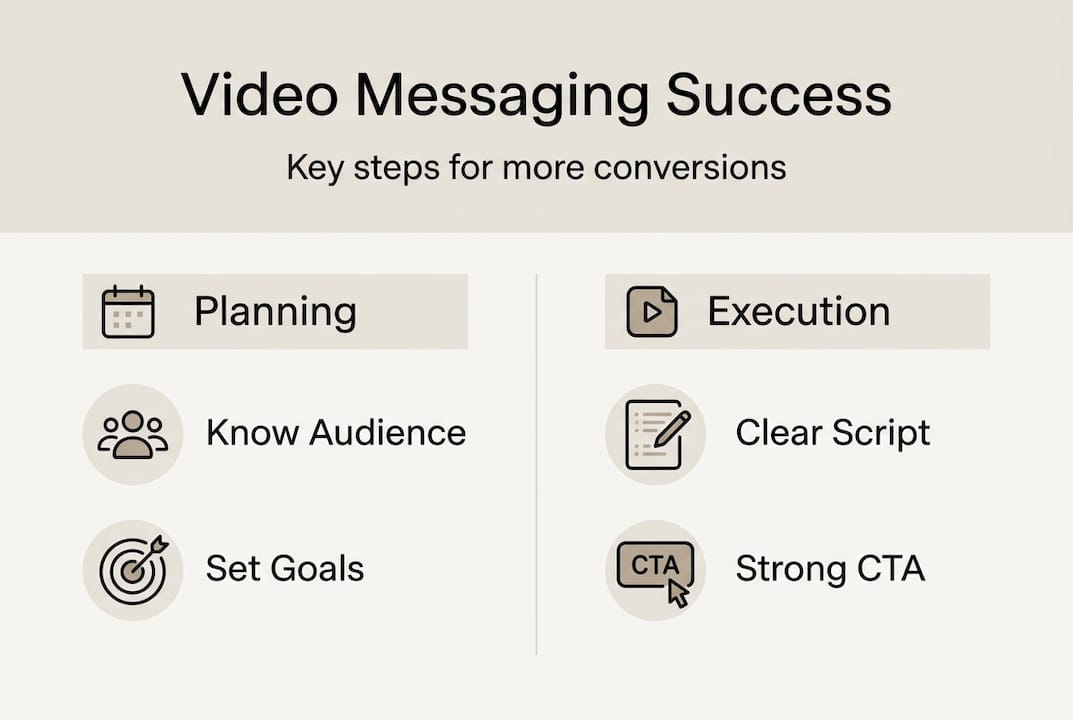
Pro Tip: Write your CTA before you write your script. Knowing exactly what action you want viewers to take keeps every line of your video focused and purposeful.
Adapting your approach to the platform matters too. TikTok audiences expect fast, casual energy. YouTube viewers tolerate more depth. Instagram Reels reward visual storytelling. Understanding these nuances helps you tailor not just what you say, but how you say it.
Short video content that is useful, easy to watch, and entertaining builds consumer trust and drives purchase intent. This isn’t a nice-to-have. It’s the foundation of a video strategy that actually moves product.
If you’re new to the space, reviewing AI video ad basics can give you a strong starting framework before you invest time in production.
Gather tools and essentials for efficient video creation
Once you’re clear on audience and goals, it’s time to assemble the right tools and assets for the job. The good news: you don’t need a full production studio to make videos that convert.
Here’s what you actually need to get started:
- Camera or smartphone with at least 1080p recording capability
- Basic lighting such as a ring light or natural window light
- A script or structured outline to keep your message tight
- A clean background or simple branded backdrop
- Editing software whether a mobile app or desktop platform
- A platform to publish and distribute across social channels
91% of businesses now use video marketing, and 82% report good ROI. The barrier to entry has never been lower, which means your competitive edge comes from speed, relevance, and messaging quality, not gear.

Here’s a comparison of your main production options:
| Approach | Cost | Speed | Authenticity | Scalability |
|---|---|---|---|---|
| Manual production | High | Slow | High | Low |
| AI-powered tools | Low | Fast | Medium | Very high |
| UGC sourcing | Medium | Medium | Very high | Medium |
For most e-commerce brands and agencies, AI-powered tools offer the best balance of speed and cost. They let you produce multiple video variations quickly, test different hooks, and scale your library without burning through budget. UGC vs traditional video approaches each have their place, but AI tools are increasingly the starting point for teams that need volume.
Pro Tip: Start with affordable AI tools and build a library of 10 to 20 short videos before investing in expensive production. Data from real campaigns will tell you what formats and messages actually work for your audience.
For editing, platforms like video editing AI tools eliminate the technical learning curve entirely, letting you focus on messaging rather than timelines and transitions.
Script, design, and shoot engaging video messages
With your hardware and platforms ready, it’s time to structure your message and produce high-impact video. This is where most brands either win or lose the conversion.
Follow this process to keep production efficient and effective:
- Write your hook first. The first 3 seconds determine whether viewers stay or scroll. Lead with a bold statement, a relatable problem, or a surprising result.
- Introduce the problem. Make your viewer feel seen. Name the frustration or desire clearly.
- Present your solution. Show or explain how your product solves the problem. Be specific, not vague.
- Add social proof. A quick testimonial, a review snippet, or a before-and-after visual builds instant credibility.
- Deliver your CTA. Tell viewers exactly what to do next. “Shop now,” “Tap the link,” or “Try it free” all outperform vague endings.
“89% of consumers say watching a product video convinced them to make a purchase.”
For format, match your video length to the platform and goal:
| Platform | Recommended length | Best format |
|---|---|---|
| TikTok | 15 to 30 seconds | Vertical, casual, fast-paced |
| Instagram Reels | 15 to 30 seconds | Vertical, visually driven |
| YouTube Shorts | 30 to 60 seconds | Vertical, story-led |
| Facebook Ads | 15 to 45 seconds | Square or vertical, caption-heavy |
| YouTube Pre-roll | 30 to 60 seconds | Horizontal or vertical, hook-first |
Visual clarity matters as much as your script. Use faces whenever possible. Human faces trigger emotional connection and hold attention longer than product-only shots. Keep text overlays short and readable on a small screen. Brand colors and logos should appear early but not overwhelm the content.
Storytelling and scripting are essential for conversions, but authentic UGC-style content consistently outperforms polished production for trust. Short-form video also delivers the highest ROI across formats.
Pro Tip: Record three different hooks for every video and test them as separate ad variations. The winning hook alone can double your click-through rate without changing anything else.
If you’re building a content operation at scale, learning about scaling UGC for growth or monetizing UGC content can open new revenue streams alongside your core ad strategy.
Optimize, test, and measure for conversion success
Once your video is live, ongoing optimization and measurement are crucial for achieving repeatable, scalable results. Publishing and forgetting is the fastest way to waste your production effort.
Start with this mobile optimization checklist before every video goes live:
- Vertical format (9:16 ratio) for all mobile-first placements
- Captions enabled for sound-off playback, which accounts for the majority of mobile views
- Fast load time by compressing files without sacrificing visual quality
- Hook visible in the first frame without needing to tap play
- CTA button or link placed where a thumb can easily reach it
Over 90% of video views happen on mobile, which makes a mobile-first strategy non-negotiable. Captions are especially important because most users scroll with sound off by default.
Once your video is running, track these metrics to understand what’s working:
- View rate: Are people watching past the first 3 seconds?
- Watch time: How far into the video do most viewers get?
- Click-through rate (CTR): Are viewers taking action after watching?
- Conversion rate: Are clicks turning into purchases or sign-ups?
- Cost per result: Is your ad spend generating profitable outcomes?
Video pages see 41% more organic traffic and 80% higher average order value compared to pages without video. That’s not just a conversion win. It’s a compounding SEO and revenue advantage.
Pro Tip: Focus your budget on the top 20% of videos that drive 80% of your results. Iterate on those winners by testing new hooks, CTAs, and thumbnails rather than constantly starting from scratch.
Staying current with social trends for video helps you spot format shifts early. And if you want to test premium formats, cinematic ad formats can elevate brand perception for higher-ticket products.
Why authenticity beats production value for conversions
Here’s the uncomfortable truth most video production agencies won’t tell you: a polished, expensive video often converts worse than a shaky, real one. We’ve seen it repeatedly across e-commerce campaigns in 2026.
High production value signals brand investment, but it can also signal distance. When everything looks too perfect, audiences sense they’re being sold to. That guard goes up immediately. Authentic content, even imperfect content, feels like a recommendation from a real person. That’s the trust trigger that actually drives purchases.
AI-generated video is exceptional for scale and speed, but it can lose the human texture that builds genuine trust. UGC remains the gold standard for authenticity, and smart brands are blending both.
The winning formula isn’t choosing between polished and raw. It’s knowing when to use each. Use AI and rapid mobile-first formats for volume and testing. Use authentic UGC’s impact on trust to anchor your highest-spend campaigns. Reserve professional production for brand moments that need to make a lasting impression. That blend is what separates brands that scale from brands that stall.
Accelerate your results with QuickAdVideo
Applying everything in this guide manually takes time, tools, and trial and error. That’s exactly why we built QuickAdVideo for e-commerce sellers, dropshippers, and agencies who need results without the overhead.
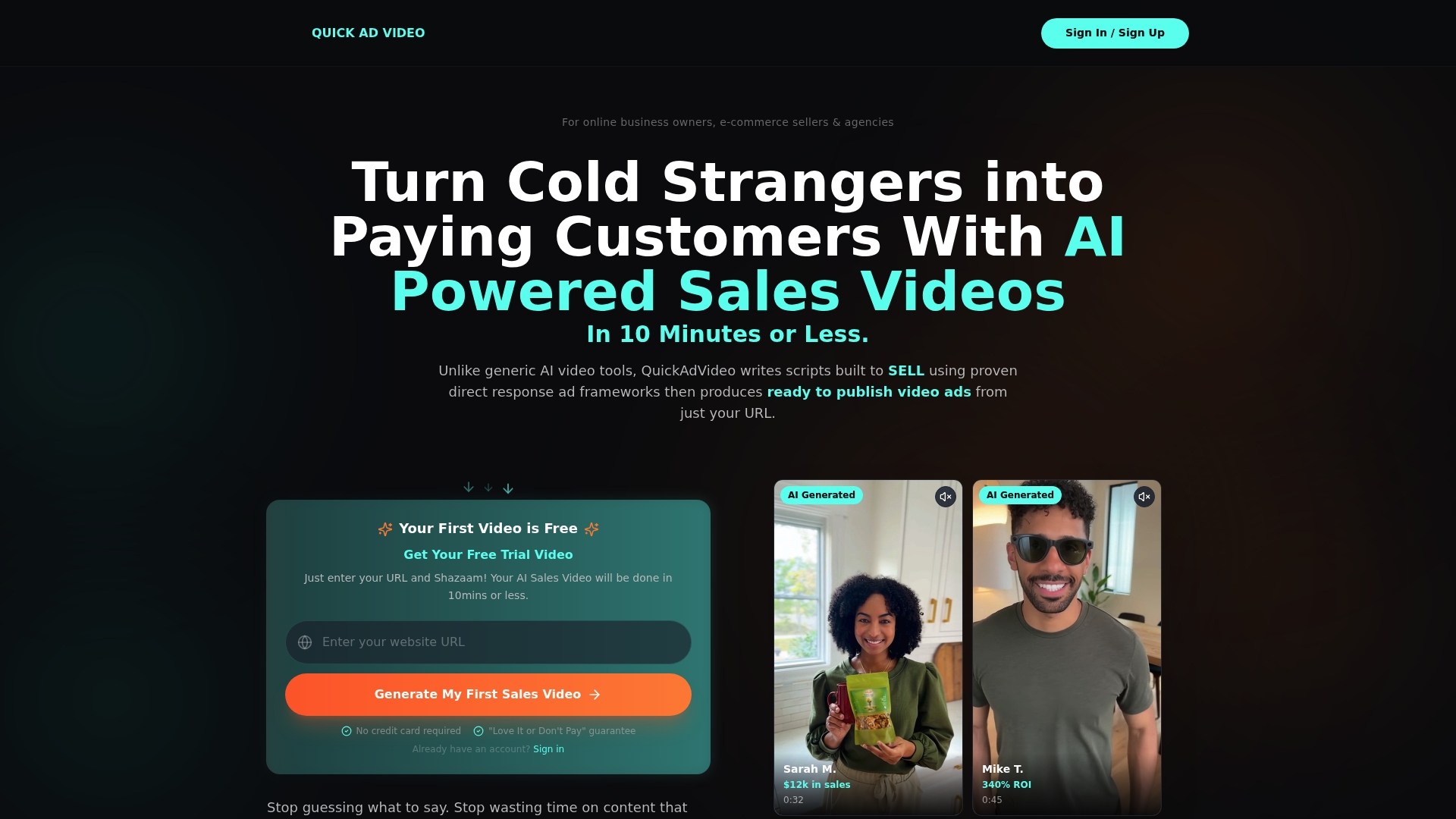
With QuickAdVideo, you paste in your product URL and the platform generates a high-converting sales video in minutes using proven direct response frameworks. No editing skills, no camera, no creative team required. Choose from AI sales video models including UGC, cinematic, and viral story formats, each designed for specific campaign goals. The built-in AI video editor lets you customize and publish directly to TikTok, Instagram, YouTube, and Facebook. It’s the fastest path from product to profitable video ad.
Frequently asked questions
What is the ideal video length for e-commerce ads?
The most effective ad videos are typically 15 to 30 seconds, focusing on one key benefit and a clear call-to-action. Short-form video consistently delivers the highest ROI, and tight scripting keeps viewers engaged through to the CTA.
Do I need professional equipment to make effective videos?
No, a smartphone with good lighting and a simple script is often enough since modern audiences prefer authenticity over over-produced content. UGC-style formats consistently outperform expensive production for trust and conversions in e-commerce.
How can I measure if my video messaging is effective?
Track engagement (views, watch time), click-through rates, and direct conversions to gauge effectiveness and inform improvements. Video pages drive 41% more traffic and significantly higher average order values, so these metrics compound over time.
What’s the main difference between AI video tools and traditional production?
AI tools allow faster, scalable, and more affordable creation, while traditional production offers more control but at significantly higher costs. The smartest approach blends AI for scale with authentic UGC for trust-building campaigns.
What is the best way to boost trust with product videos?
Feature real users, keep videos concise, and focus on usefulness and entertainment to increase trust and sales. Short, entertaining videos that solve a real problem build consumer trust faster than any production technique.
Recommended
- QuickAdVideo - AI Sales Video Generator
- Getting Started with AI Video Ads: A Complete Guide | QuickAdVideo Blog
- QuickAdVideo - AI Sales Video Generator
- QuickAdVideo - AI Sales Video Generator
- How to Build a Multi-Channel Marketing Strategy - City Web Company | Digital Marketing Agency
- How to create brand content that drives real results | AMW Media
Related Posts

Why Use Templates for Video Ads: Scale Smarter
Discover why use templates for video ads to streamline production. Boost efficiency and scale your campaigns without losing creativity!

The Role of Data-Driven Video Ads in Boosting ROI
Discover the role of data-driven video ads in boosting ROI. Learn how analytics enhance engagement, optimize campaigns, and drive results.

Create Persuasive Video Ads Workflow That Converts
Learn how to create persuasive video ads workflow that transforms your ideas into optimized, high-converting campaigns. Get started today!